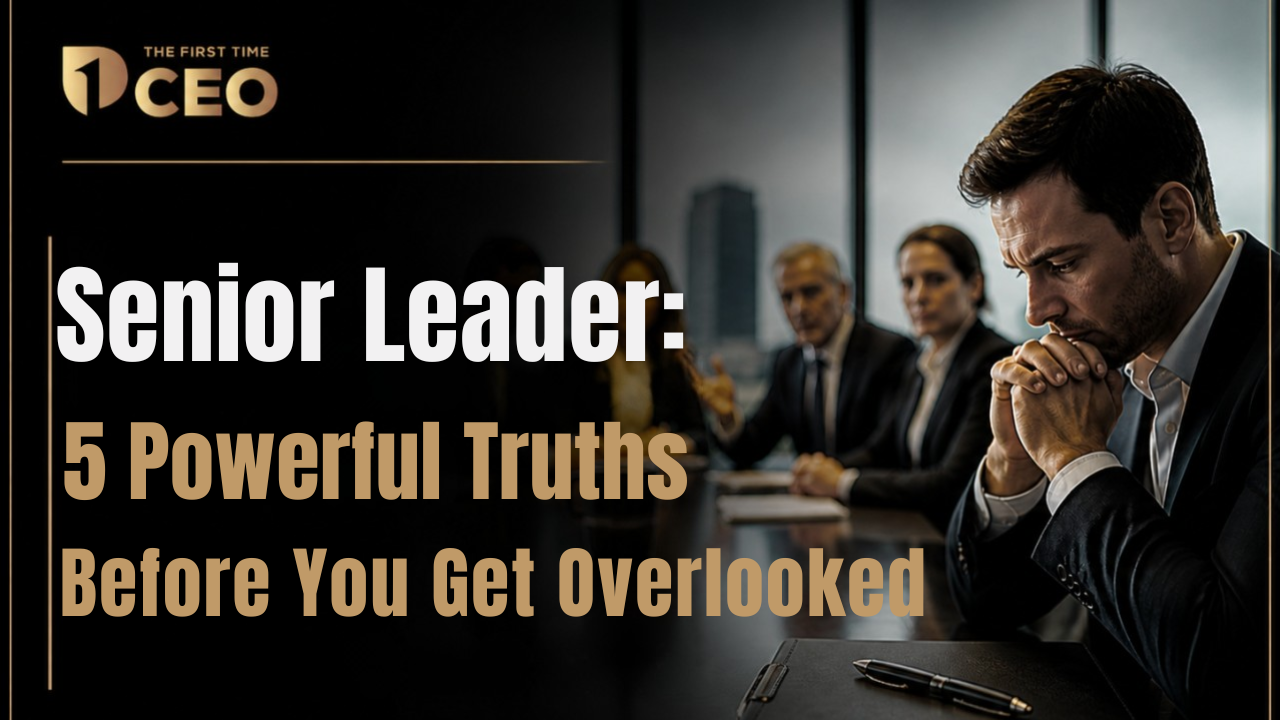
Most high achievers have worked hard, delivered results, and built a reputation for being reliable. As per them, they have given their all to their organization and beyond. Yet, despite their competence and reliability, their career seems to be crawling or has stalled.
They are no longer getting the exciting projects, their senior leadership isn’t calling on them for big decisions, and that next promotion and enhancement of role feels just out of reach.
If you feel this sounds like you; you are not alone. Many high-achieving leaders hit this invisible wall —not because they lack talent, but because they haven’t shifted their approach to leadership at the next level.
Let us unravel why this happens, and more importantly, how you can break free from this situation.
What this means : You know how to get things done, but are you playing a role in shaping the bigger picture? Many leaders stay stuck because they’re seen as operators, not visionaries. Senior executives aren’t looking for someone to just execute plans—they want leaders who can see around corners, anticipate challenges, and drive strategy. If you are not regularly speaking up in high-level discussions or proactively bringing ideas to the table, you risk being overlooked.
What to do: Start framing your work in terms of business impact, not just task completion. Instead of focusing on “We improved efficiency by 20%,” focus on, “This efficiency gain will help us to free up resources for high-value projects that will drive $X in revenue.” Directing focus of your work towards meeting organizational growth changes the entire perspective about how your work is perceived.
What this means : Ever noticed how some people command the room the moment they speak? That’s executive presence. It’s not about being loud or flashy; it is about polished confidence, clarity, and the ability to make people listen. If your ideas are great, but aren’t resonating well with senior leadership, very likely, it is not about what you are saying it is about how you are saying it. You might be making a great idea sound mundane and dull.
What to do : Work on your body language, tone, and messaging. Record yourself presenting, get feedback, and refine how you show up in high-stakes conversations. Your self-expression must elevate your work and showcase your capabilities in the best possible way.
What this means : Hard work does not always get noticed, especially as you grow in your career. Influence does. Many leaders plateau because they are not building relationships with the right decision-makers. If senior executive leadership don’t know what you bring to the table, they may not be well informed enough to advocate for you when big opportunities arise. Most of the times, working silently results in you being sidelined or overlooked.
What to do : Identify the key stakeholders in your company. Who are the decision-makers? Who has a say on high impact decisions? Who signs-off and approves strategic initiatives? Connect with these leaders. Build authentic relationships, understand their priorities towards the organization. Design ways to align your contributions with their goals and key organizational objectives. These powerhouses should be able to recall your name with ease for the right opportunities.
What this means : If your team can’t function without you, you are not leading; chances are you are micromanaging. As a result, you are also blocking the growth of your peers and subordinates. Many leaders stay stagnate because they are unable delegate effectively. Leadership is not about being the best at everything and doing it all alone. It is about building a team that can execute even without you.
What to do : Shift from “doing” to “guiding.” Identify what only you should be handling and what can be empowered to your team. Free yourself to focus on bigger, strategic initiatives. Create an effective delegation matrix, empower your team with right skills, knowledge and behaviors. Give feedback and help them to take more responsibilities. Delegate, so that you can elevate. Master people and their psychology so that you can connect better with them.
What this means : The skills that got you here won’t get you there. The world is changing fast AI, automation, digital transformation and people who are constantly upgrading themselves. If you are still relying on the same playbook you creates years ago, you risk becoming outdated. Leaders who adapt stay relevant; those who resist get left behind.
What to do : Stay curious. Take up courses and learning programs, join industry discussions, attend leadership forums. Invite leaders into brainstorming leadership roundtables. The best leaders never stop learning. Time to update that playbook in real time.
What this means : You might be a functional expert, but can you talk business strategy and financials? Do you have the ability to look into the future and identify opportunities? Do you have the foresight to predict and manage risks? Many leaders get stuck because they don’t have a strong grasp of profit and loss (P&L), revenue drivers, or financial impact. The C-suite speaks the language of business outcomes. If you don’t, you will always be seen as a department head, not a future executive or an industry leader.
What to do : Get comfortable with financial reports. Partner with finance leaders, ask questions, and understand how your work contributes to the bottom line. Understand how the decisions you take today can elevate your organization. How creating the right environment for progress can change the direction of your company and it’s people. Train yourself to think big.
What this means : Your work speaks for itself; but does it speak loud enough? If your influence is only limited to your immediate team or business unit, you are invisible to industry leaders and recruiters. Senior roles often go to people who are recognized thought leaders. They are considered experts and authorities on a variety of associated domains.
What to do : It is time to sharing insights on platforms LinkedIn, mentoring others, or speaking at industry events. Get connected with industry forums like CII, FICCI, ASSOCHAM etc. Take initiative towards socially impactful activities with a genuine choice to make the world a better place, in your own way. Your personal brand should reflect the value you bring beyond your job title.
What this means : Leadership is about bold and impactful decisions, not just safe execution. If you are always waiting for permission and clear directions, avoiding tough conversations, or playing safely within existing structures, you may be seen as a good soldier, but not a visionary leader.
What to do : Take ownership. Volunteer for high-risk, high-reward projects, and position yourself as someone who creates opportunities rather than waits for them. Start by putting yourself out there and taking initiative. See the results and start testing deeper issues. If you don’t take chances, you will continue to be overlooked.
What this means : The best athletes, CEOs, and innovators all have coaches and mentors. Yet many leaders hit a plateau because they believe they can figure it out alone. A mentor accelerates your growth, expands your perspective, and challenges your blind spots. Finding a neutral platform helps you in chartering and walking on the path to progress.
What to do : Seek out mentors, coaches, peer advisory groups and forums. Be open to feedback, even when it’s uncomfortable. Growth happens when you push beyond your comfort zone. If you don’t push yourself through re-learning and re-skilling, you cannot expect to keep pace with the fast evolving global landscape.
What this means : Many leaders focus on the next role, but the real game is building a long-term trajectory. Are you positioning yourself for a C-suite role, a global leadership position, or an industry-shaping career? Without a plan, you’re just reacting to opportunities instead of creating them. You may be relying on your seniors for elevating you. The reality is beyond the 10-12 year experience level, you have to create a leadership roadmap to reach your desired role and position.
What this means : Define where you want to go, build the skills and network to get there, and make strategic moves that align with your long-term vision. Learn skills like strategy design, business case, cross-functional expertise, people management and psychology.
♟️Think Strategically – Stop focusing just on execution and start shaping the bigger picture.
♟️Own the Room – Develop executive presence so your ideas land powerfully.
♟️Build Lasting Influence – Share your strategy and get key decision-makers on your side.
♟️Scale Your Leadership – Delegate and empower your team; so you can move up.
♟️Stay Ahead – Keep learning, evolving, and adapting.
♟️Speak Business, Not Just Operations – Master financials and strategic thinking.
♟️Improve Visibility – Build a value oriented personal brand and professional network.
♟️Take Bold Moves – Volunteer for high-impact projects and own your leadership journey.
If you feel you have reached the leadership plateau, it is time to change the strategy. It is now time to begin working effectively, leading differently, and positioning yourself for the next level. The next chapter of your career is usually not waiting for you—you have to step up and claim it.
Do you want to join the conversation? Connect with us at support@thefirsttimeceo.in