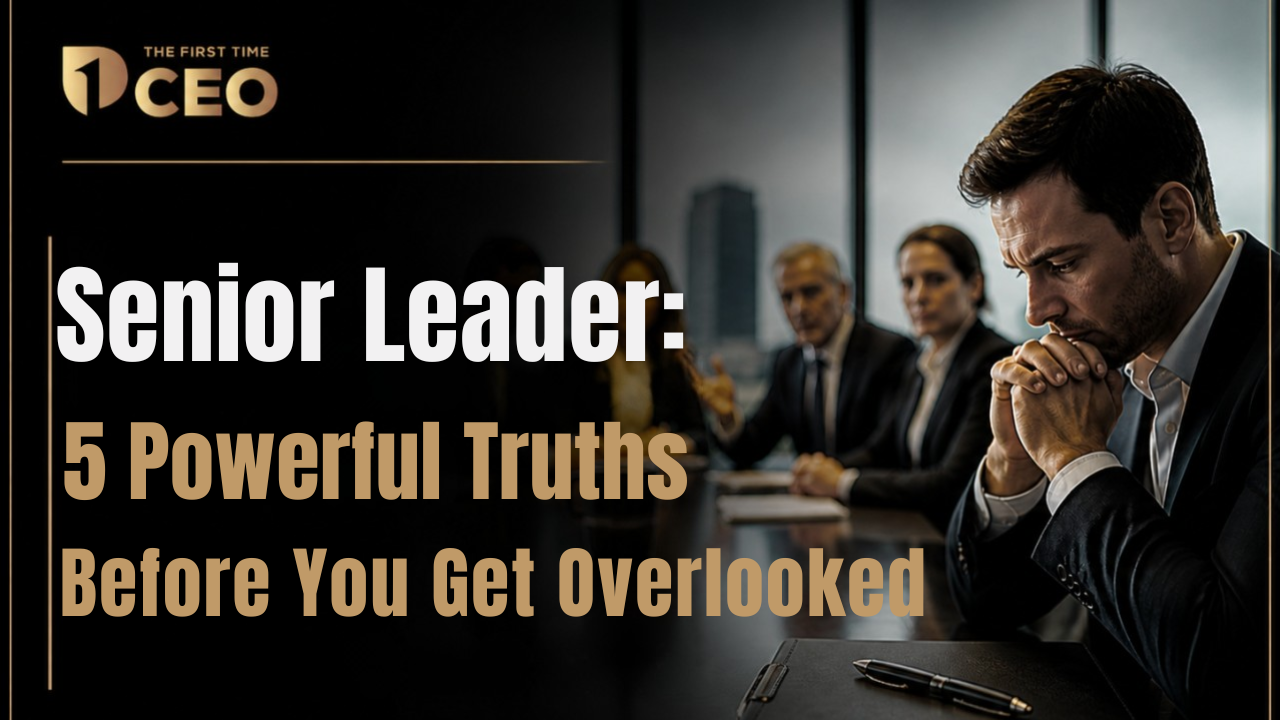
Leadership today is not just about making decisions or holding authority. Rather, it is about staying adaptable, influencing teams effectively, and driving long-term success. The challenge? Many leaders find themselves overwhelmed, struggling to maintain consistency, and reacting to situations instead of shaping them.
As leaders, I believe all of us have found ourselves in such situations time and again.
That is precisely where a Leadership OS (Operating System) comes into play.
Just like a computer’s OS manages resources and processes, a Leadership OS helps leaders structure their thinking, make effective decisions, and navigate challenges with clarity. A well-defined Leadership OS is just not a tool, it is the very foundation for sustainable leadership growth.
Most leaders come with extensive experience, expertise, or past success. But sustaining leadership requires more than just competence—it requires a structured, repeatable, and scalable approach that helps leaders operate at their best.
Without a solid Leadership OS, leaders often struggle with:
A well-structured Leadership OS has five essential components that allow leaders to operate with clarity, confidence, and impact:
Great leadership starts with a strong vision that aligns decisions, priorities, and strategies.
📌Without a vision, leaders react instead of leading with purpose.
How to Apply It: Define your personal leadership philosophy—what do you stand for? Align your vision with your organization’s long-term goals. Regularly revisit and refine your vision as the market evolves.
2. A Decision-Making Framework
Frequently making decisions in the moment without a guiding framework leads to inconsistency and stress. A strong Leadership OS includes a structured way to analyze, prioritize, and execute decisions.
📌Leaders who make fast but informed decisions create momentum.
How to Apply It: Use a Decision Matrix (Impact vs. Urgency) to prioritize actions. Implement a data-driven approach to reduce biases. Create a checklist for making high-stakes decisions under uncertainty.
3. Execution & Accountability Systems
A great idea is meaningless if it isn’t followed through. A Leadership OS ensures consistent execution by building accountability into leadership routines.
📌Execution turns strategy into real results.
How to Apply It: Use OKRs (Objectives and Key Results) to track progress. Set up weekly review cycles to stay on top of priorities. Continuously promote a culture of accountability where teams take ownership.
4. Influence & Team Management
Leadership is more than just about strategy because it is about people. Leaders with a strong OS know how to inspire, delegate, and build high-performing teams.
📌A leader’s success depends on how well they manage people, not just processes.
How to Apply It: Adapt your leadership style using the Situational Leadership Model. Implement structured delegation to empower your team. Develop a mentorship culture where leadership growth is continuous.
5. Continuous Learning & Adaptability
The best leaders don’t operate with a “fixed mindset.” They evolve consciously and deliberately with experience, market shifts, and new insights.
📌Leaders who stop learning lose relevance, respect and effectiveness.
How to Apply It: Schedule regular self-assessments to identify growth areas. Engage in executive coaching, mastermind groups, or peer learning. Stay updated with industry trends and emerging leadership methodologies.
1. Prevents Burnout & Overwhelm
With structured systems in place, leaders make fewer but more impactful decisions. This prevents mental exhaustion and allows leaders to focus on high-value activities.
2. Creates High-Performing Teams
When leaders operate with a clear and repeatable system, teams know what to expect, leading to better alignment, engagement, and productivity.
3. Builds Trust & Influence
Leaders who consistently follow a strong OS are seen as credible, reliable, and strategic, increasing their influence within and outside their organizations.
4. Helps Navigate Uncertainty
In unpredictable markets, leaders with a strong OS adapt quickly without losing control, making them more resilient and agile.
5. Leaves a Leadership Legacy
Great leaders don’t just lead—they build systems that sustain leadership even after they move on.
Using this step wise approach, as a leader, you can design your own Leadership OS. This is how thousands of leaders who use The First Time CEO Frameworks have designed their own Leadership Operating System.
🎯Step 1: Assess Your Current Leadership Style
➡️Identify strengths, weaknesses, and blind spots.
➡️Gather feedback from peers and team members.
🎯Step 2: Define Your Leadership OS Framework
➡️Document your decision-making principles and leadership philosophy.
➡️Align it with your organization’s needs and long-term leadership vision.
🎯Step 3: Integrate Your OS into Daily Leadership Practices
➡️ Use a Leadership Dashboard to track priorities and key decisions.
➡️ Build routines that reinforce accountability and structured decision-making.
🎯Step 4: Develop a Leadership Development System
➡️Establish an inhouse mentorship or coaching program for team members.
➡️Encourage ongoing leadership training and upskilling.
🎯Step 5: Regularly Evolve & Renew Your OS
➡️Review your OS every 3 months.
➡️Adapt to new challenges, industry shifts, new goals and personal growth insights.
Conclusion
A Leadership OS is not just a tool, it iss the foundation for sustainable leadership growth. Without it, leaders operate on instinct and reaction, leading to burnout, inconsistency, and ineffective decision-making. But with a well-structured Leadership OS, leaders can navigate challenges, inspire teams, and create lasting impact.
Leadership today is about being proactive, not reactive. The best leaders build repeatable systems that allow them to operate at their best; day in and day out.
So, ask yourself: Do you have a strong Leadership OS in place? Or are you leading on autopilot? The answer will determine your long-term success.
If you want to join the conversation, write to us at : support@thefirsttimeceo.in