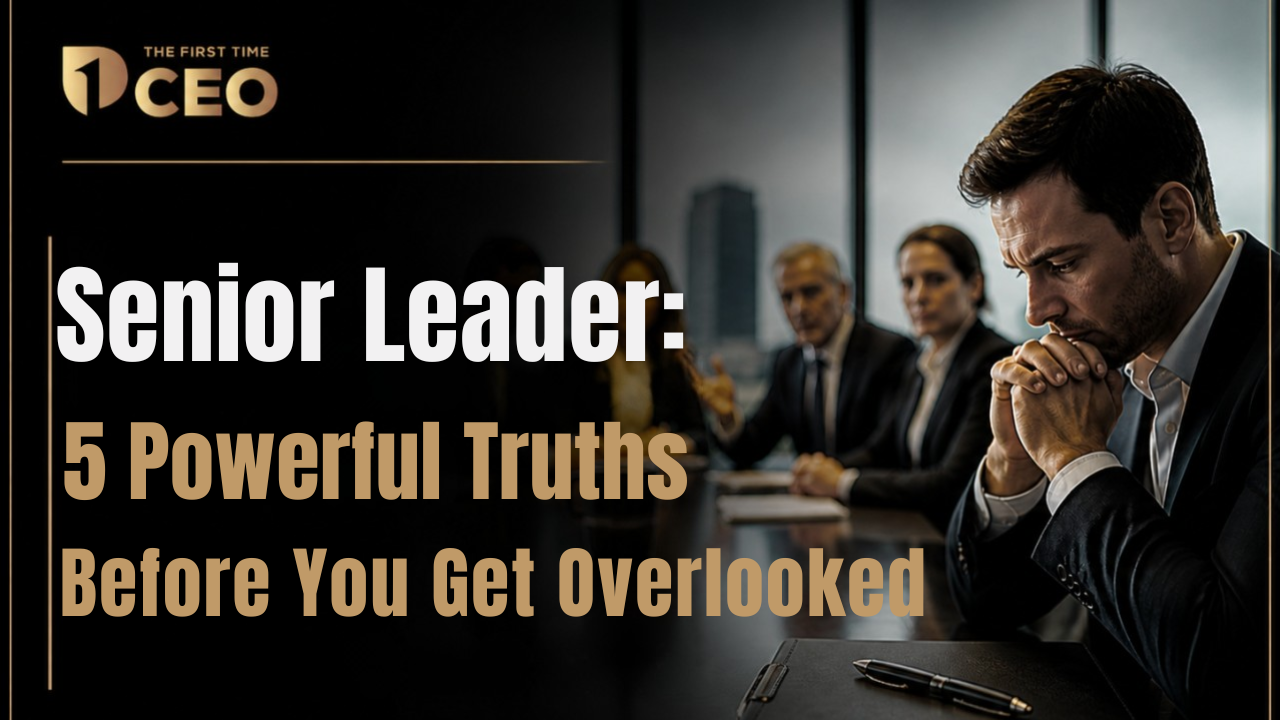
If you’re a senior leader with twenty or thirty years of experience and you’ve started asking why the calls from executive search have slowed down, you’re not alone, and it’s rarely about capability. It’s about relevance.
Every week, conversations with accomplished senior leaders circle back to the same three questions, usually somewhere around the second cup of coffee: Why am I not being considered for bigger roles? Why are equally experienced peers moving faster than me? Why isn’t executive search calling as often as it used to? In almost every case, the honest answer isn’t a skills gap, it’s a market that has quietly moved the scorecard.
Here’s what boards, CEOs, and search firms are actually paying a senior leader for today.
Technical expertise gets a senior leader to the table, but judgment is what earns the permanent seat and AI has closed that gap fast by absorbing much of the technical work that once took years to master. According to BCG’s AI Radar 2026, 72% of CEOs now personally lead AI decisions in their organizations. What’s scarce isn’t tool fluency, it’s knowing which decisions should never be handed to a model.
What you can do: Next time data only gets you 80% of the way, resist asking for one more analysis. Say the judgment call out loud, with your reasoning, so people see how you think, not just what you decide.
One of the biggest conversations in leadership never shows up on a performance review: fatigue. DDI’s Global Leadership Forecast 2025, based on over 10,000 leaders across 50 countries, found that 71% report significantly higher stress since stepping into leadership, and 40% have seriously considered stepping away to protect their wellbeing. Exhausted leaders postpone hard conversations and delegate poorly and organizations pay for that quietly. Stamina has become a real leadership capability, not a private wellbeing issue.
What you can do: Treat your energy like critical infrastructure. Build recovery into your calendar before the quarter runs away from you.
Many genuinely excellent senior leaders stay invisible outside their own department. They hit every target, yet when succession conversations happen upstairs, their name never comes up not for lack of skill, but because no one outside their function has seen it. Enterprise-level leadership requires influence that functional excellence alone doesn’t build.
What you can do: Find one enterprise-level forum where you have no natural reason to be present, and earn your way in with a perspective only your functional depth can offer.
Boardrooms are asking for a different mindset. Being “board ready” used to be a late-career milestone; that assumption no longer holds for a senior leader aiming at enterprise responsibility. Strategic thinking beyond your function, comfort with risk oversight, and a habit of independent judgment now separate enterprise leaders from operational ones.
What you can do: Start reading board papers and annual reports the way a director would, looking for the questions a director should ask, not just the numbers an operator reports.
Leadership appointments are far less forgiving today. A newly promoted senior leader is expected to build credibility, align stakeholders, and show measurable impact in a window that would have felt unreasonably short a decade ago. The leaders who succeed aren’t always the most technically capable, they’re the ones who understand how trust and influence actually travel inside an organization.
What you can do: In your first 30 days, resist acting immediately. Listen with intent, map where influence really sits, then make the early calls that define how the organization reads you.
Organizations today pay a senior leader who reduces uncertainty, builds the bench, and prepares for what’s next, not the one still operating on what the market rewarded five years ago.
If you are ready to stop waiting and start leading with intention, I invite you to explore the First Time CEO strategic leadership program. Our FREE leadership training and leadership development approach is built specifically for senior professionals who are done being the most reliable person in the room and are ready to become the most influential.